
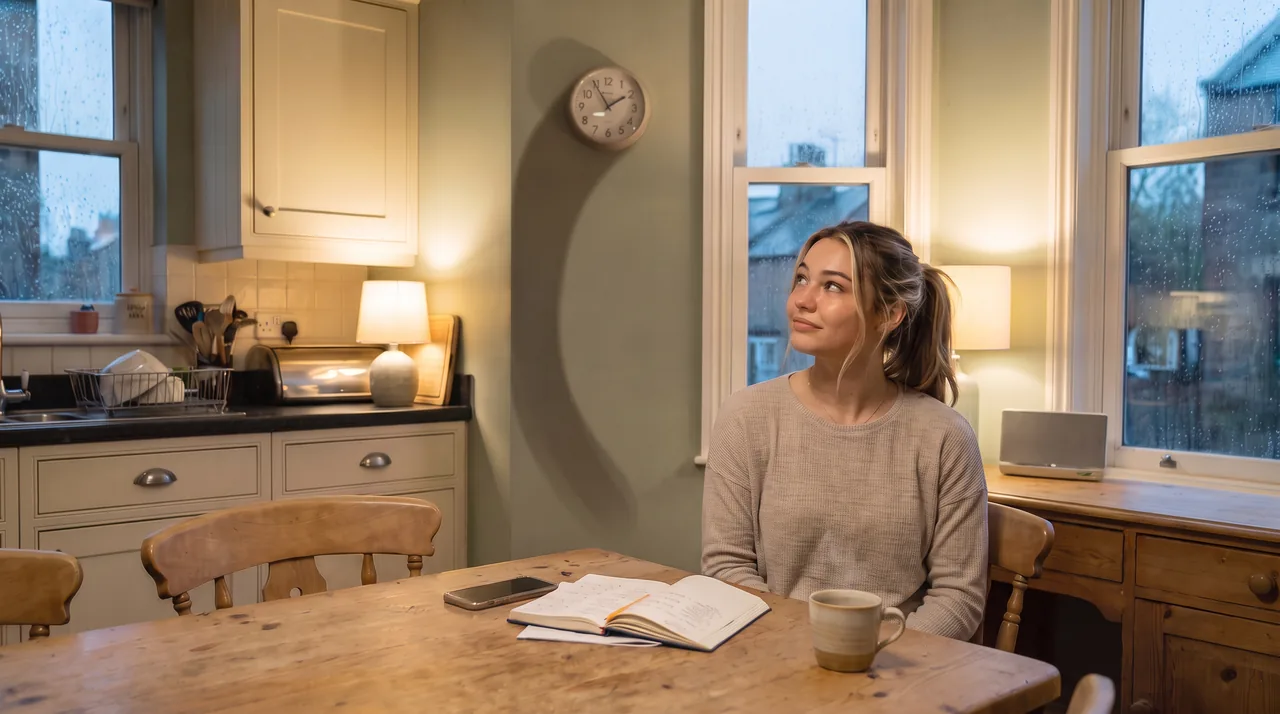
The kitchen clock had developed an opinion about my evenings.
Whenever I sat down, it moved faster.
I tested this twice. Once with a cup of tea, and once with an email containing two five-minute meditations. Both times, it was suddenly time to make dinner.
My husband suggested the clock was probably fine.
He was standing beneath it, eating cheese directly from the fridge, so I questioned his qualifications.
The email had arrived after an appointment we had rearranged. There was a fourteen-page collection of meal ideas, a mindfulness handout, two short guided meditations, and a video about body tapping. Enough to make a small plan. I was already considering a larger one.
I saved everything into a folder called “Feeling Better.”
Then I made subfolders.
This took longer than either meditation.
We had booked our appointments one after the other, late enough to get there after work.
Even that had taken some arranging. A meeting ran over. A Saturday belonged to two commitments. We kept discussing which evening might be quieter, as though one might arrive unexpectedly and introduce itself.
I protected time quite fiercely when someone else expected me somewhere. My own appointments seemed to be written in a softer pencil.
What finally bothered me was how often I spent the afternoon looking forward to going home, then arrived too tired to enjoy being there.
My husband would tell me something about his day. I would listen while unpacking a bag, checking a message, and wondering what we could make for dinner.
Later, I’d realise I hadn’t asked how the story ended.
At the appointment, I brought questions I had collected on my phone. Some were practical. Others I had written just before sleep, when everything felt urgent and the room was dark enough to make me honest.
Afterwards, we walked to the car.
“Do you want to talk about it?” my husband asked.
“In a minute.”
He nodded and took my bag while I found the keys.
I was glad he didn’t ask another question straight away.
The resources arrived the next day.
The health resources are still here.
Meal ideas, a mindfulness handout, two short guided meditations and a body-tapping video from Dhaya Integrative Health, alongside the supplement prescription sent separately through Fullscript.
The meal handout began with egg muffins: spinach, grated carrot, eggs, and the possibility of making enough for another morning. Further in were nut-butter overnight oats, rosemary chicken and a cinnamon-spiced salmon I read twice because I had never thought of those two things together.
I imagined opening the fridge to find that a thoughtful woman had already considered lunch.
I hoped to become her shortly.
The supplement prescription arrived separately through Fullscript, sent by Dr. Mina. Another email to save. Another part of the plan I wanted to understand.
I added questions to my phone: what was each one for, how did it fit with everything else, and when were we checking in again? I wanted to understand the plan before turning it into another shopping list.
The mindfulness handout was by Thich Nhat Hanh. It moved from noticing a breath to noticing the body carrying it, then releasing tension and walking with a little more attention. I liked that walking was allowed. Sitting still already sounded like an advanced qualification.
But the meditation links were the things I kept returning to. Five minutes sounded so reasonable that I was embarrassed by how long I spent finding somewhere to put them.
There was always something nearly finished.
A reply that would only take a moment. Washing that needed hanging. A kitchen I could clear quickly if nobody spoke to me.
I wanted to begin when I could give it my full attention.
Meanwhile, the email stayed flagged.
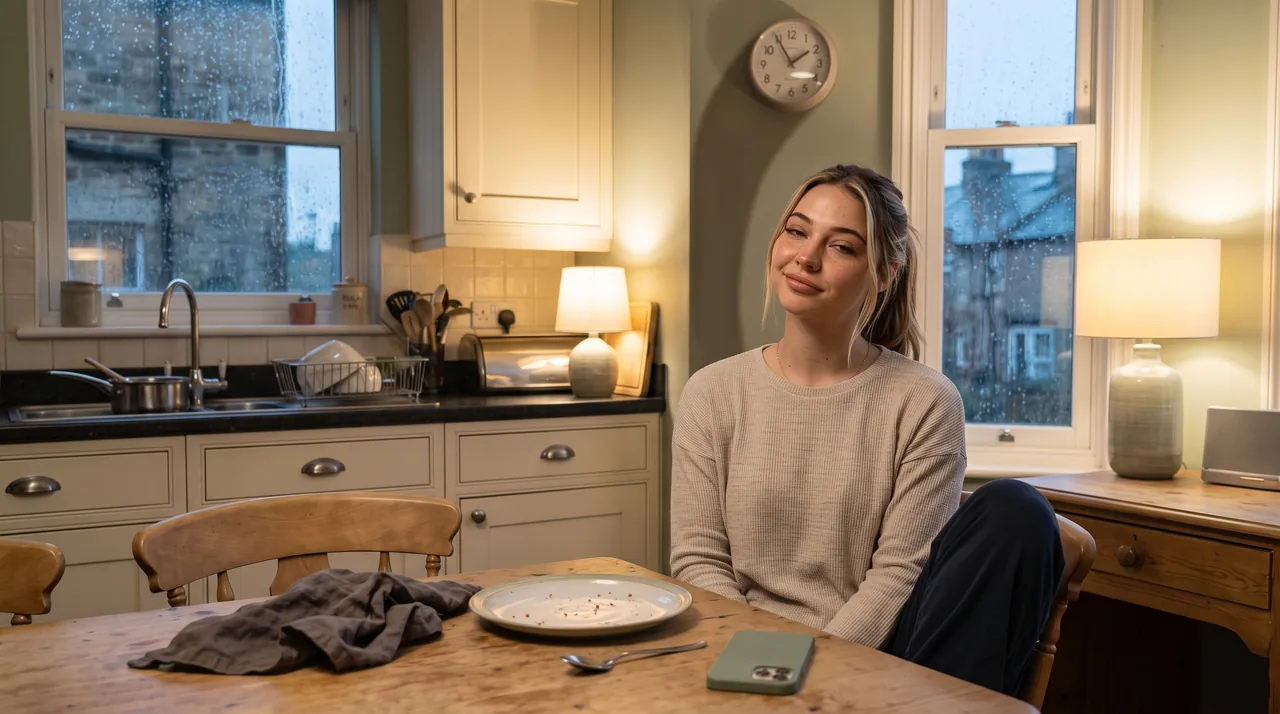
One evening, I sat down before I had finished clearing the table.
There was a spoon beside my elbow. A saucepan was soaking in the sink. My phone contained several opportunities to become useful.
I pressed play.
A gentle voice began speaking.
I closed my eyes and remembered the washing.
Then a message I hadn’t answered.
Then something awkward I’d said three years earlier, which apparently required immediate attention.
I opened my eyes.
Forty-three seconds had passed.
Across the kitchen, the clock’s hands were moving at an entirely respectable speed.
I nearly stopped the recording. I could come back when I was better at this.
Instead, I put the phone face down and stayed in the chair.
I heard the fridge.
A car passed outside. In the next room, my husband was opening a packet with the determination of someone who believed quieter packaging ought to exist.
My mind wandered again.
I noticed that I was holding my shoulders up as though someone might ask me to carry a shelf.
I let them settle.
Halfway through, I thought about dinner. Once, I reached toward my phone before remembering why it was face down.
Then the recording ended.
The spoon was still there. The saucepan still needed washing.
I stayed seated for another moment.
My husband appeared in the doorway.
“Tea?”
“Yes, please.”
He took the spoon on his way to the kettle.
I watched the steam begin to gather. Usually, I would have found something to do while we waited.
“What happened with that thing you were telling me about?”
He leaned against the counter and told me.
There were more rearranged evenings after that.
The ingredients I bought with great intentions still occasionally became a small investigation at the back of the fridge. Some nights, I remembered the recording only after I had climbed into bed.
But I began sitting down while things were unfinished.
Sometimes I played it. Sometimes I drank my tea. Once, I watched the rain make its way down the kitchen window until I stopped trying to decide which drop would arrive first.
I didn’t keep a record of these evenings.
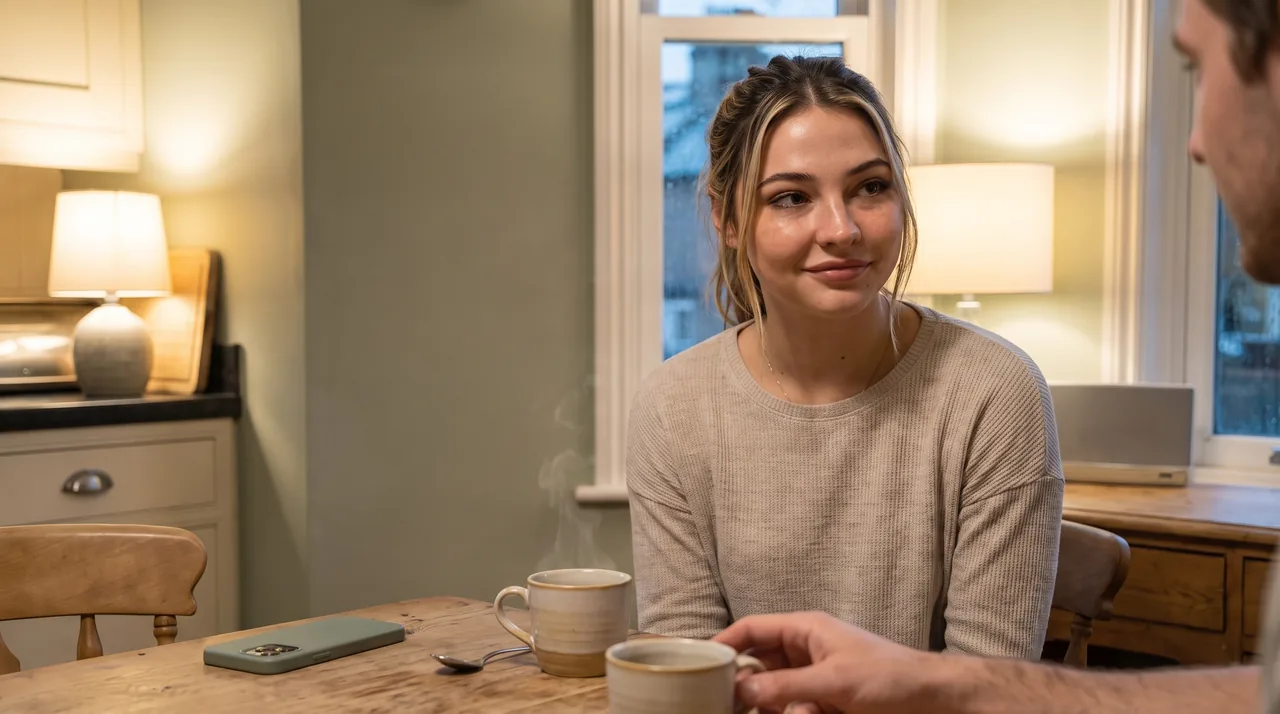
Last night, my husband brought over two cups while I was still at the table.
I moved a spoon to make room.
He sat down opposite me, and I left my phone where it was.
For once, my tea was too hot to drink.